
Short answer: to import gym equipment from China, shortlist real factories, confirm the spec and voltage of every machine, inspect the goods before they ship and agree after-sales in writing. Then pick a shipping term and a customs broker. At TMAX Fitness, a commercial gym equipment factory in Shandong, China, since 2015, the MOQ is 1 unit and production usually takes 7–30 days.
That is the whole process in four steps. The rest of this guide is the detail that separates a smooth first order from a container of machines you can’t use. It is written for gym owners, chains and fitness equipment distributors in Europe, North America, South America and Australia who are buying commercial equipment, not one home treadmill.
Is Chinese gym equipment good quality?
It can be, and plenty of the commercial machines in gyms around the world are already made in China. The honest answer is that quality depends on the factory and the grade you order, not on the country. The same industrial area can produce a light-duty machine built to a price and a commercial machine built for a busy gym. If you have read gym-owner threads on Reddit about buying gym equipment from China, most of the bad stories come down to one of three things: the buyer ordered a light-duty grade, dealt with a middleman who couldn’t answer technical questions, or never saw the goods before they shipped.
So don’t ask “is it good?” Ask questions that make a supplier show you what you are paying for:
- Which standard is it built to? For commercial use, ask for EN ISO 20957 Class S, the class for commercial and professional use. TMAX Fitness builds its commercial cardio and strength machines to EN ISO 20957 Class S.
- What is the frame? Ask about tube gauge, welding and the finish. Look at close-up photos of welds and coated surfaces, not just studio renders.
- What are the moving parts? Cables, pulleys, bearings, belts and motors wear first in a gym that opens at 6 a.m. Ask who makes them and whether replacements are kept in stock.
- What use is it designed for? Ask how many hours a day the machine is designed to run, and get the answer per model. A treadmill built for a hotel gym and one built for a 24-hour club are not the same machine.
A factory that builds commercial equipment will answer all four without hesitation. If the answers are vague, that tells you something too.
Factory or trading company: how to tell
Trading companies are not always bad. Some add real value in consolidation and paperwork. But if you want commercial grade at factory terms, you need to know who actually builds the machine, because that is who controls quality, lead time and spare parts.
Five checks that sort it out quickly:
- Ask for a live video call of the production floor. Not an edited clip. Ask them to walk from welding to assembly to the packing area and to point the camera at a machine you are quoting.
- Check the business licence. The scope should include manufacturing, and the company name should match the invoice and the bank account you pay.
- Ask technical questions. A factory answers them in the same conversation. A trader often says “let me check with the factory”.
- Look at real photos. Workshop, assembly, inspection and packing photos that match each other say more than a catalogue.
- Ask about export history. Which markets, for how long, and through which kind of customers. TMAX has been manufacturing since 2015 and has exported to 80+ countries.
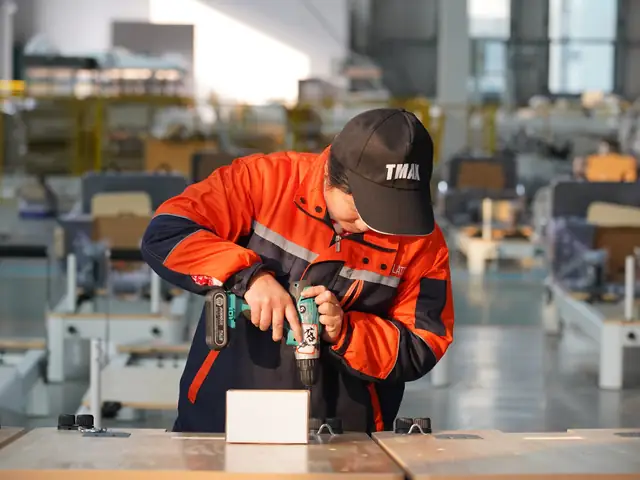
If you want to see what this looks like in practice, here is what our factory looks like: a 21,378 m² production facility with in-house CNC machining, welding, assembly and inspection, producing 2,000–3,000 units per month. You can also browse our factory and equipment gallery before you book a video call.
Specs to confirm by machine type
Every machine on your order should have a written spec sheet you have checked line by line. Don’t accept “same as the photo”. This is the short list we would check as a buyer.
Cardio
- Treadmills: motor type and rating (continuous, not peak), running area, belt and deck type, speed and incline range, console functions. For curved, self-powered treadmills, there is no motor, so ask about the belt system and bearings instead.
- Bikes, ellipticals and rowers: resistance system (magnetic, air or other), flywheel, drive belt, crank and pedal quality, console and power source.
- Stair climbers: step mechanism, drive and safety stop.
Strength
- Selectorized machines: weight stack, cable type, pulleys and bearings, shrouds, upholstery and adjustment points.
- Plate-loaded machines, racks and benches: frame tube, welds, finish, pivot bearings, upholstery and the hardware used to anchor racks.
Functional training
- Frame and connection hardware, surface finish, how parts are assembled on site and which accessories are included.
For every machine, also confirm the frame colour, upholstery colour, logo placement if you are ordering OEM, and the documents you will receive: spec sheet, user manual and installation guide. If you are buying a whole floor, send your floor plan first. TMAX offers a free 2D/3D gym layout, so the equipment list and the quote are built around your room, not the other way round.
Voltage, plugs and local requirements
This is the mistake that costs the most for the least reason. A treadmill wired for the wrong voltage can’t be used on arrival, and rewiring it locally adds cost and risk.
- North America generally runs 110/120 V. Europe, the UK and Australia generally run 220–240 V, and plug types differ between them.
- Tell the factory your destination country, voltage and plug type before production, and get them written on the order for every powered machine.
- Ask what local documents your market or your customers expect. For the EU, ask for CE marking documents for the models you order.
TMAX motorized equipment is supplied for 110–220 V with your plug type (EU, US, UK, AU or others on request), so the machine is ready to plug in on arrival. If you are planning a cardio line, start with our commercial treadmills and state your country in the quote.
Tariffs and landed cost basics
The factory price is only part of what you pay. Your landed cost also includes freight, insurance, import duty, customs fees, local delivery and installation. Duty rates for China-made equipment have changed several times recently and differ by market and by product classification, so we don’t quote them here. Read our guide to gym equipment tariffs in 2026, then ask your customs broker to classify each item before you place the order.
Two practical points: agree the shipping term (for example FOB or CIF) in writing, and give the factory your destination port early so the quote covers the right route.
Inspection, packing and loading
Never let a container leave without knowing what is inside it. Your options, from basic to thorough:
- Factory inspection report with photos or video of your actual machines running, not stock images.
- Your own video inspection: a live call where you pick machines at random and ask for them to be switched on and operated.
- Third-party pre-shipment inspection by an independent company before you pay the balance.
At TMAX, every unit is inspected before it ships, and third-party inspection by TÜV SÜD or HQTS can be arranged for your order.
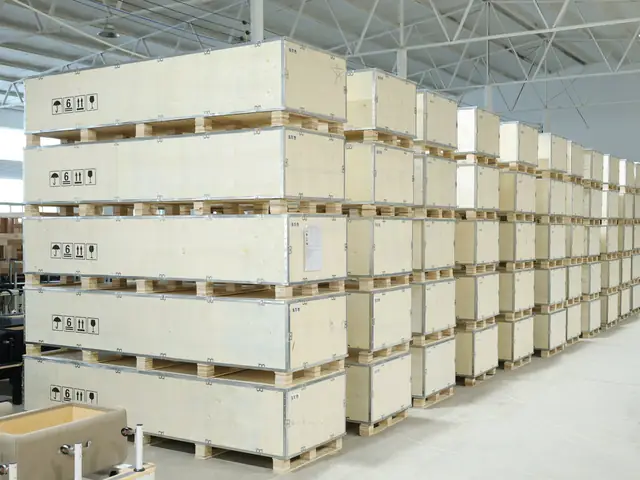
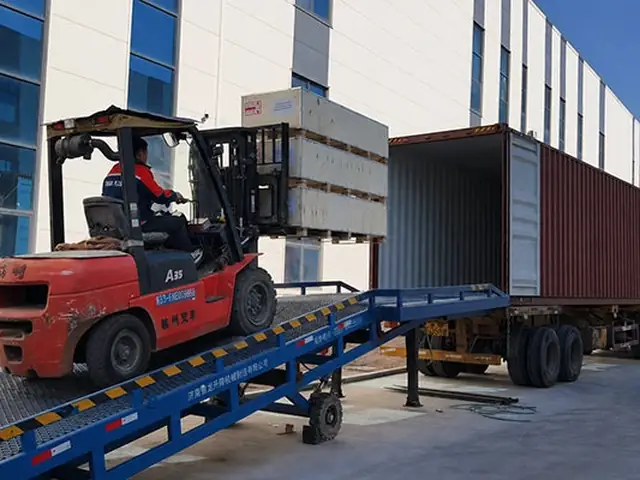
Packing matters as much as inspection. Ask how each machine is protected: corner protection, wrapping for upholstery and consoles, cartons or wooden crates for heavier and more delicate items, and how crates are fixed in the container. Ask for photos of your goods packed and loaded, and check that shipping marks match your paperwork. Full or mixed containers across cardio and strength lines can be combined in one shipment.
Lead times, MOQ and after-sales
- MOQ: at TMAX the MOQ is 1 unit. Every unit is made to order, and you can mix cardio and strength models in one quote. Samples are available before a bulk or OEM order.
- Lead time: production usually takes 7–30 days, depending on model and quantity. Your quote confirms the exact timing. Add shipping time and customs clearance on top when you plan an opening date.
- Warranty: get it in writing, including what it covers and who pays for replacement parts and shipping. TMAX Fitness gives a 1-year warranty on the whole machine; distributors may negotiate up to 3 years on the frame.
- Spare parts: ask how you order parts, how they are identified (model and serial number) and how quickly they ship. For a busy gym, order a small kit of common spare parts such as cables and belts with the first shipment, so one worn part never keeps a machine out of use.
- Service process: agree how a fault is reported. At TMAX you send the model, serial number, purchase date and a photo or video of the issue, and our technical team works through it with your service technician.
Your import checklist
The table below sums up what to check, why, and what to ask for. The last column shows how we answer at TMAX Fitness.
| Check | Why it matters | What to ask for | TMAX Fitness answer |
|---|---|---|---|
| Factory or trader | The builder controls quality, lead time and parts | Live floor video, licence scope, matching invoice and bank name | Manufacturing since 2015; exported to 80+ countries |
| Safety standard | Commercial gyms need commercial-grade machines | The standard and class for each model | Commercial machines built to EN ISO 20957 Class S |
| Frame, cables, bearings | These parts wear first in daily use | Close-up photos, component details per model | In-house CNC machining, welding and assembly |
| Voltage and plug | Wrong wiring means the machine can’t be used | Country, voltage and plug written on the order | 110–220 V with your plug type |
| Pre-shipment inspection | Problems are cheap to fix before loading | Inspection report, video or third-party inspection | Every unit inspected; TÜV SÜD or HQTS on request |
| Packing | Damage in transit is common and slow to resolve | Packing method and photos of your goods packed | 100% inspection, then export packing |
| MOQ and lead time | Sets your cash flow and opening date | MOQ and production time in writing | MOQ 1 unit; usually 7–30 days |
| Warranty and spare parts | Downtime costs members | Written warranty terms and a parts process | 1-year warranty on the whole machine; distributors may negotiate up to 3 years on the frame. |
And the ten-line version to keep next to your inbox:
- Book a live video call of the production floor.
- Check the business licence, invoice name and bank name match.
- Ask which standard and class each machine is built to.
- Get a written spec sheet for every model and check it line by line.
- Write your voltage and plug type on the order for every powered machine.
- Send your floor plan and confirm colours, upholstery and logo placement.
- Ask your customs broker to classify each item and agree the shipping term.
- Inspect before shipping: report, video call or third-party inspection.
- Get photos of your goods packed and loaded before you pay the balance.
- Get the warranty and spare-parts process in writing, and order a small parts kit.
FAQ
How do I import commercial gym equipment from China?
Shortlist real factories, confirm the spec and voltage of every machine, inspect the goods before they ship and agree after-sales in writing. Then pick a shipping term and a customs broker. At TMAX Fitness you can start with one unit, and most orders are ready in 7–30 days depending on the model.
Is Chinese commercial gym equipment good enough for a busy gym?
It can be. Quality depends on the factory and the grade you order, not on the country. Ask which safety standard each machine is built to, what the frame, cables and bearings are, and what the warranty covers. TMAX Fitness builds commercial machines to EN ISO 20957 Class S, the class for commercial use.
How can I tell a real gym equipment factory from a trading company?
Ask for a live video of the production floor, not edited clips. Check that the business licence lists manufacturing, that the company name matches the invoice and bank account, and that the supplier answers technical questions without “checking with the factory”. A factory can also show export history: TMAX has shipped to 80+ countries since 2015.
Will a treadmill from China work with 110 V or 220 V power in my country?
It should, if you order it that way. Tell the factory your country, voltage and plug type before production, and get them written on the order for every powered machine. TMAX Fitness builds cardio equipment for 110–220 V and fits the plug your market uses, so the machine is ready to plug in on arrival.
What warranty and spare parts should I expect from a Chinese gym equipment factory?
Get the warranty in writing, including what it covers and who pays for replacement parts. TMAX Fitness gives a 1-year warranty on the whole machine; distributors may negotiate up to 3 years on the frame. For a busy gym, order a small kit of common spare parts such as cables and belts with the first shipment, so one worn part never keeps a machine out of use.
Get a quote for your project
Send us your model list or floor plan, your destination country and your voltage. We reply with pricing, lead time and shipping options for your market. Request a quote.